
#3 The First Two Hours Tell You Everything About Fermentation
How much your starter grows in the first two hours is the single strongest predictor of when it will peak. This discovery means SourFriend can start making accurate predictions far earlier in the process.

What's the hardest part of predicting a fermentation peak?
You don't know anything until it happens.
The moment you put the starter in and close the lid, all you can do is wait. Check the markings every so often. Estimate whether today's running fast or slow. Hope your gut feeling is right.
The question we kept coming back to:
"How early can we actually start predicting?"
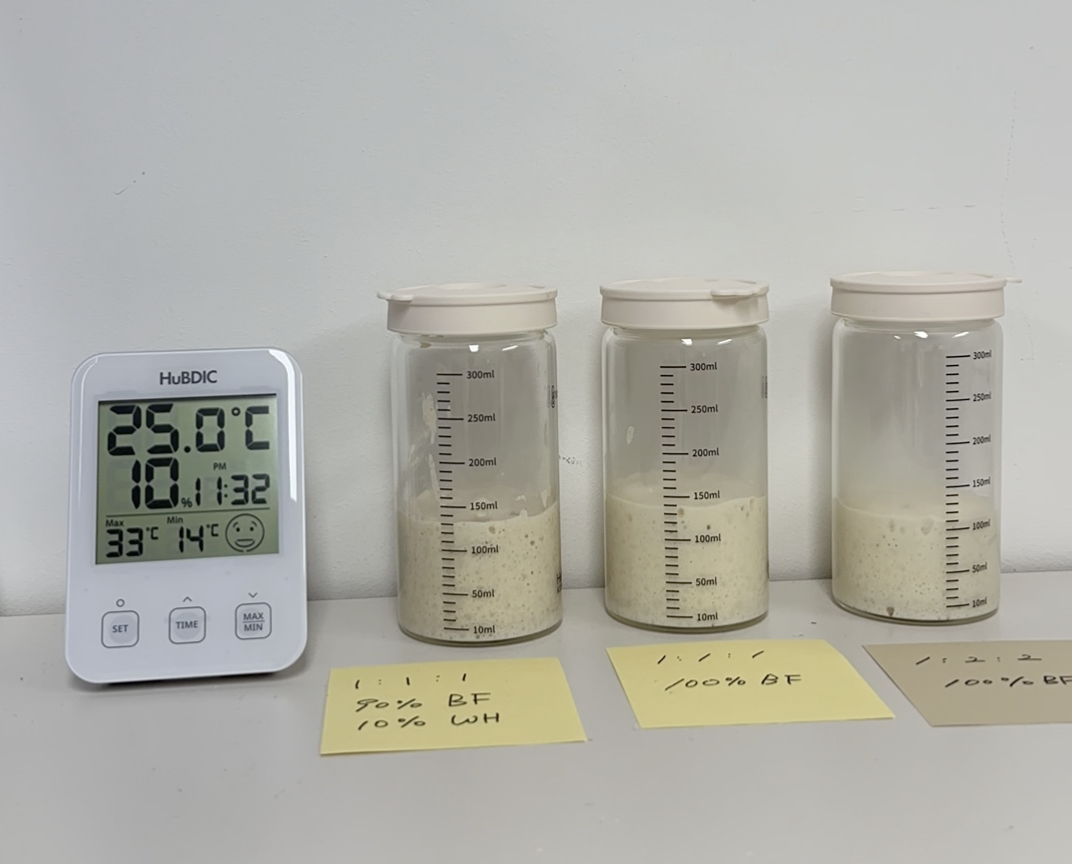
What We Found: The Answer Is Already There by Hour Two
Looking at our fermentation data, we found the single strongest predictor of peak arrival time — and it shows up within the first two hours.
Specifically, how much the starter has grown by the two-hour mark is more tightly correlated with final peak timing than almost anything else we measured. One-hour data was meaningful too, but two-hour data was significantly more predictive.
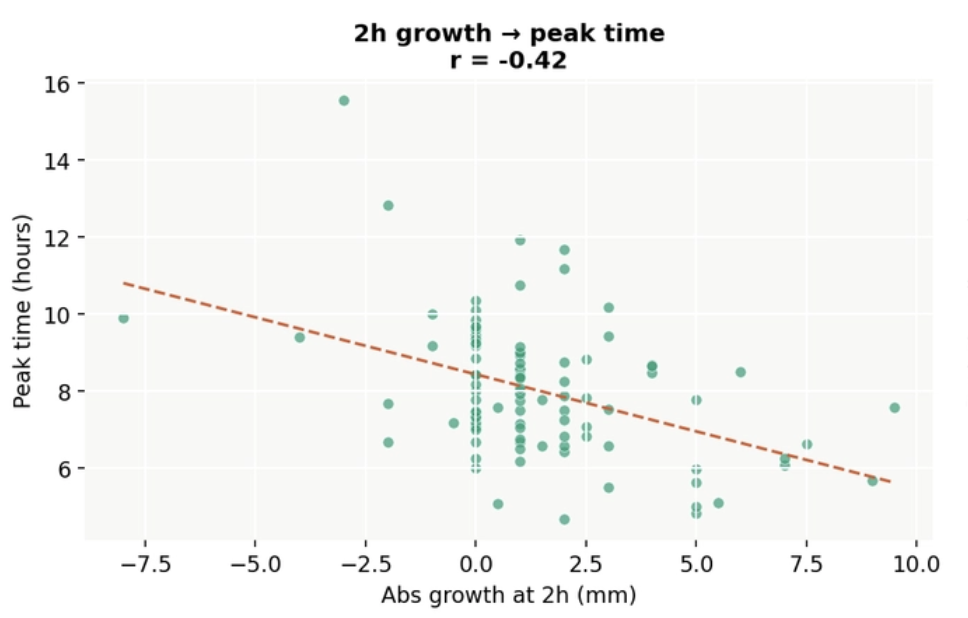
It makes intuitive sense when you think about it.
A starter that's climbing fast early on is already telling you something: it's active, it's healthy, and it's ready to go. That energy carries through — and it peaks earlier. On the flip side, a starter that barely moves in the first two hours is telling you it needs more time. You can read that early.
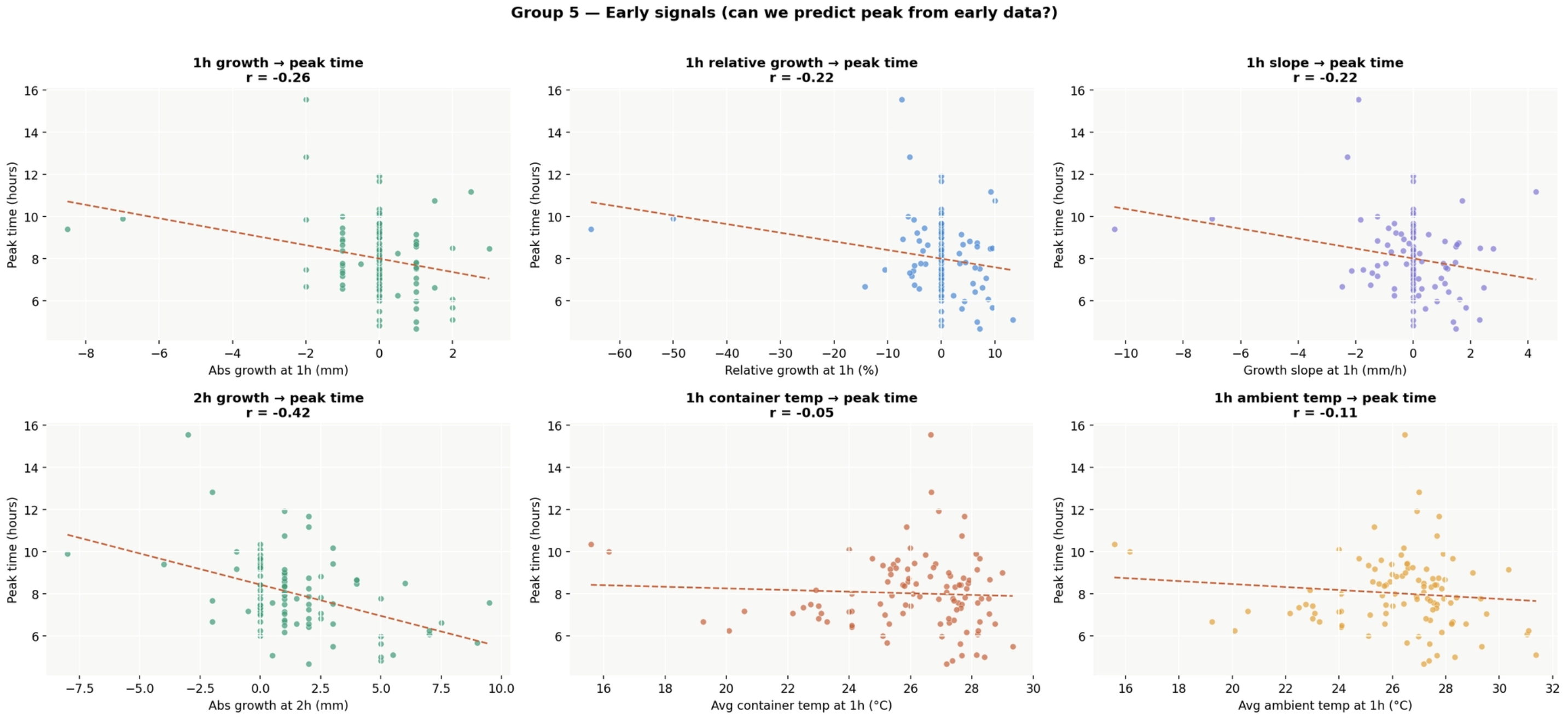
What This Actually Means
Until now, peak alerts have been reactive — "I'll tell you when it gets close." You'd already be watching for a while before any real prediction could kick in.
This finding changes that:
Two hours in, SourFriend can already start giving you a meaningful estimate for when your peak will arrive.
Two hours is enough time to put your starter in, grab a coffee, take care of something else, and come back. By the time you return, the calculation has already started.
One More Thing: Speed Beats Height
Here's something else we found that surprised us.
How high a starter ultimately climbs is a surprisingly weak predictor of when it peaks. A tall fermentation doesn't necessarily mean a fast one.
What actually matters is how fast it's climbing. A starter rising quickly will hit its peak earlier than one that reaches the same height more slowly. And that speed is already readable in the first two hours.
Predicting a peak is really about reading velocity — not destination.
High peak ≠ Long fermentation. Fast growth = Fast peak.
But What About Temperature?
"Warmer kitchen, faster fermentation" — true in principle. But when we dug into the temperature data, we found something that didn't quite match expectations.
That's what we'll cover next: what temperature data actually tells us, and what most people get wrong about it.