
#2 Your Starter Has a Type: The Three Fermentation Personalities We Discovered
Every fermentation follows one of three patterns — fast, medium, or slow — yet all three trace the same S-curve. Identifying your starter's type early is the key to more accurate peak prediction.

"Why is my fermentation so much faster today?"
Even experienced bakers ask this. Same recipe, same starter — but some days it peaks in six hours, and other days it's still climbing after ten.
It can feel completely random. Like your starter just does what it wants.
We thought so too, until we looked at the data. Turns out, there's a pattern.
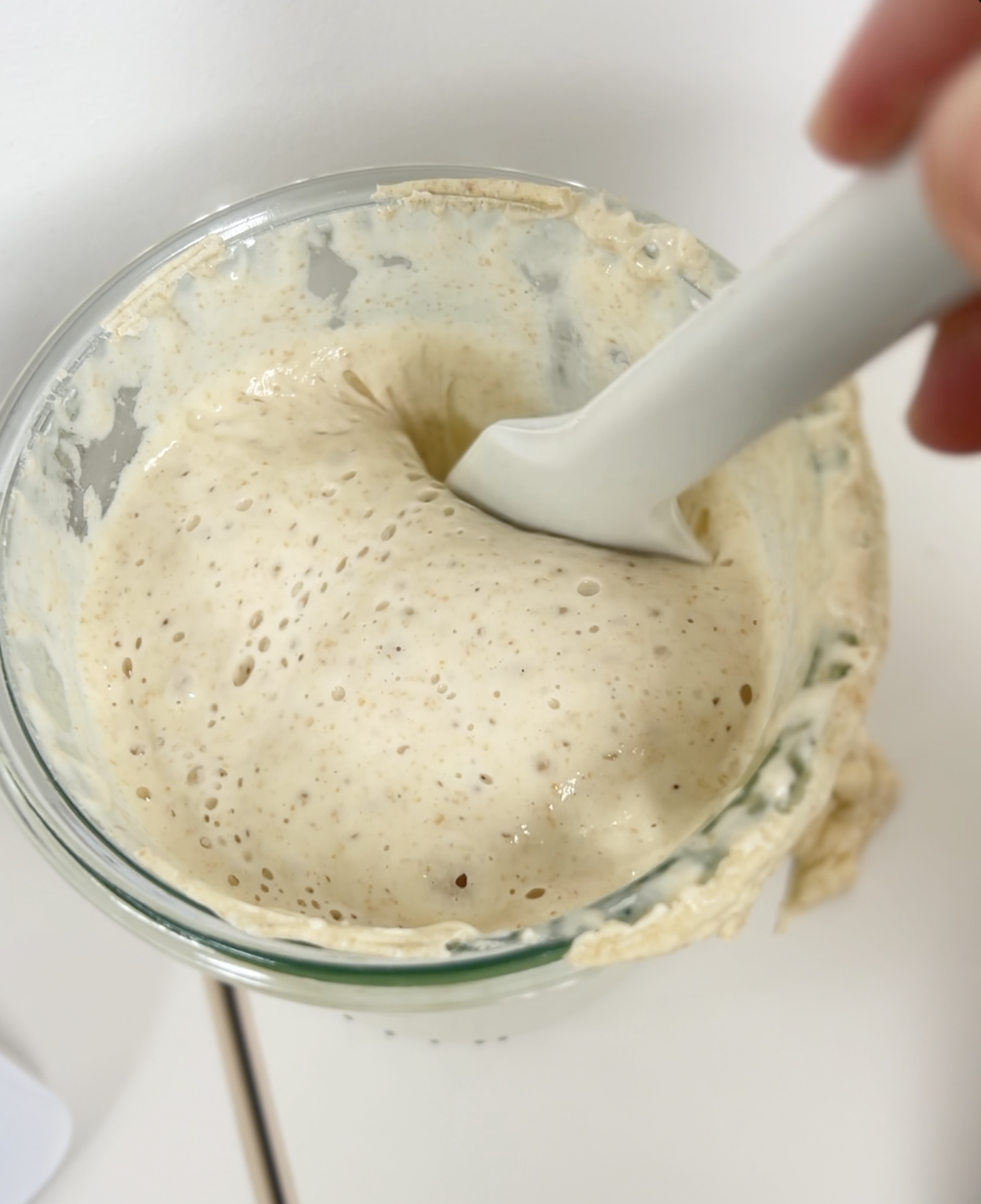
Three Distinct Patterns
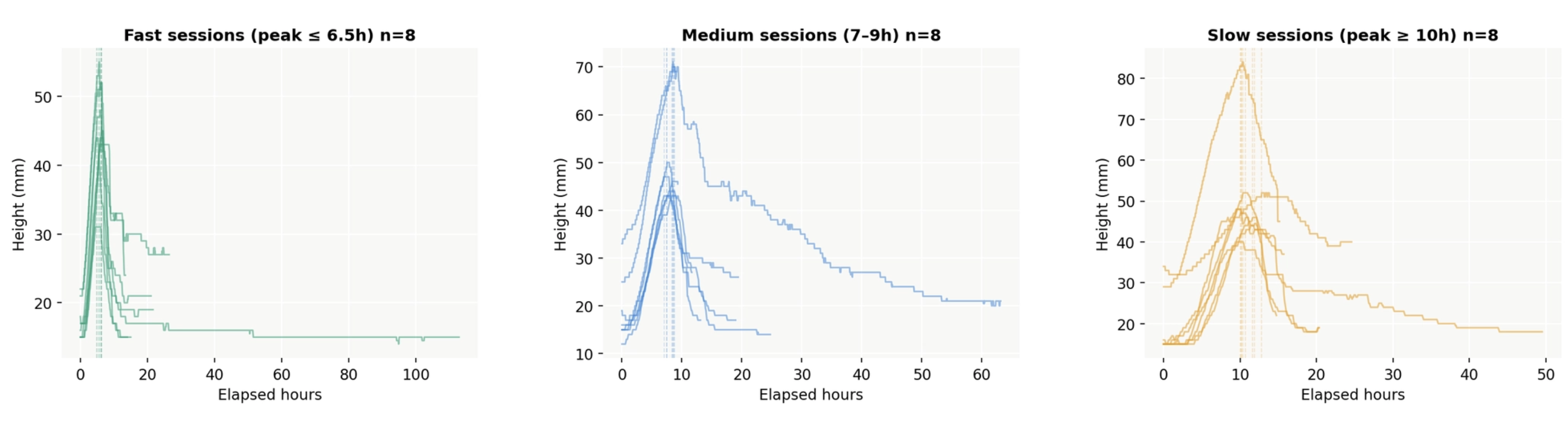
After analyzing our fermentation data, we found that every session falls into one of three clear types:
Fast (under 6.5 hours)
The starter shoots up quickly right from the start — reaching more than half its total growth within the first few hours. This pattern tends to show up with active, well-fed starters in good condition.
Medium (7–9 hours)
A gradual climb, a brief plateau, then a peak around the 70mm mark. This is the most common pattern, and probably the one most bakers would recognize as their normal baseline.
Slow (10+ hours)
A long, steady rise that takes its time. These sessions often reach greater heights, but they get there slowly. Changes in flour-to-starter ratios often push fermentation into this range.
Here's the Surprising Part
The type changes, but the shape doesn't.
No matter which category a session falls into, every single fermentation follows the same basic curve: slow out of the gate, then an accelerating climb, then a gradual taper as it approaches the peak. The classic S-curve.
Fast fermentations compress that S-curve into a shorter window. Slow ones stretch it out. But the underlying rhythm stays the same.
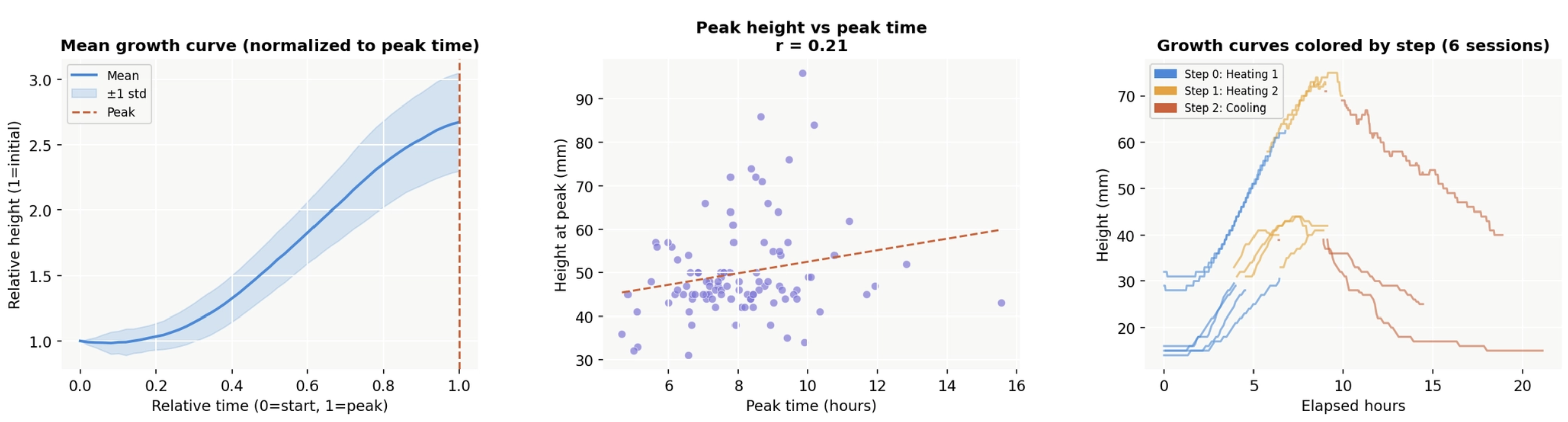
Once we know what type a fermentation is trending toward, prediction gets dramatically more accurate.
Catching "this one is running fast" early means we can adjust the expected peak time before most people would have noticed anything at all.
So Which Type Is Your Starter?
It's not fixed. The same starter can shift between types depending on your kitchen temperature and recipe ratios. But there's usually a tendency — a pattern your starter gravitates toward under your conditions.
What SourFriend is working on is reading that pattern as early as possible after a session begins.
And it turns out, the clearest signal shows up in the first two hours.
That's what we'll dig into next.